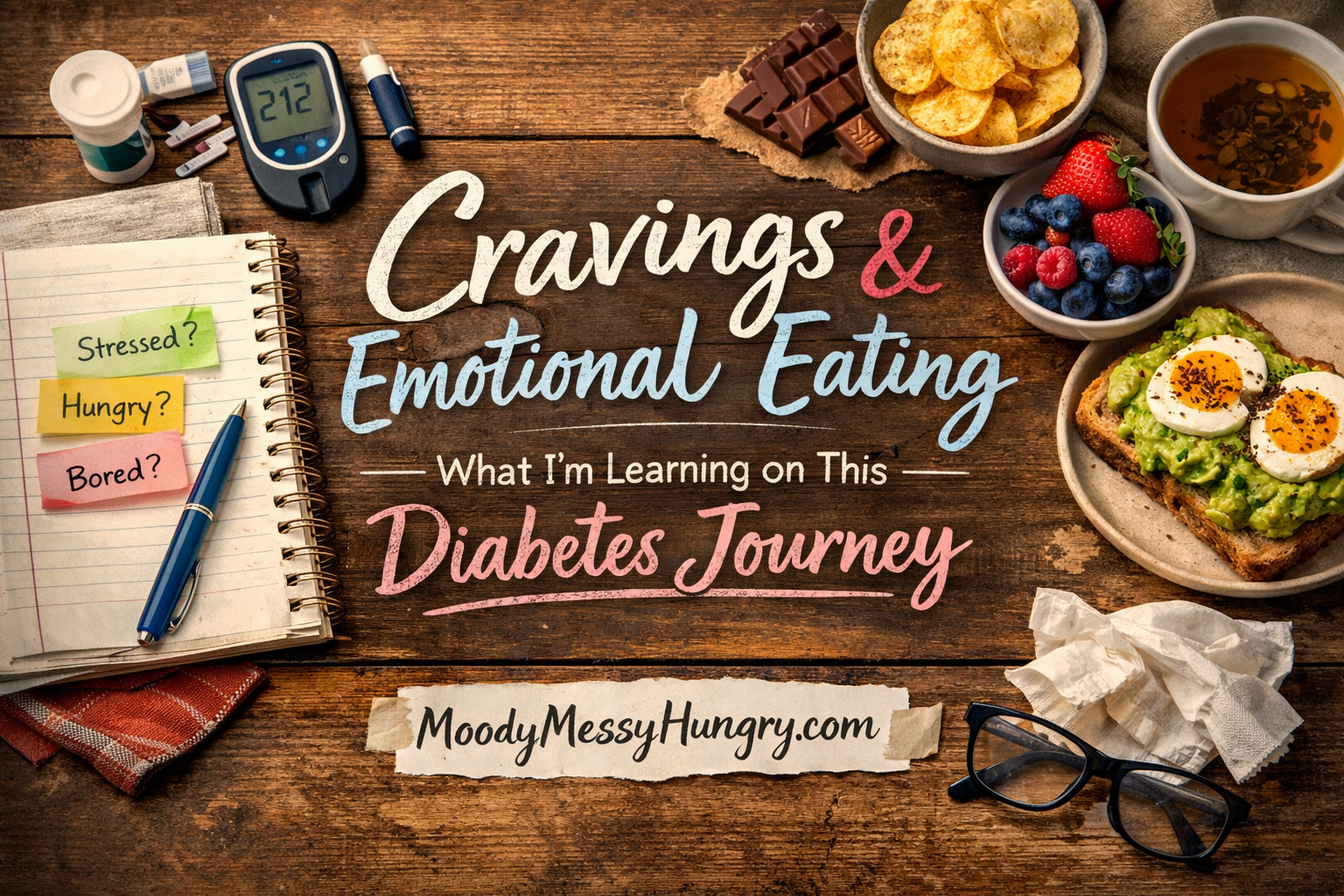
It used to feel like a personal failing to have cravings. I would instantly feel guilty if I wanted anything crunchy, sweet, salty, or comforting—why can’t I restrain myself? Why am I this way? However, I had to reconsider everything I believed to be true about hunger, emotions, and the role that food plays in my life after receiving a diabetes diagnosis.
Perfection is not the topic of this piece. It’s about comprehending the underlying causes of cravings, how emotions influence our eating habits, and what’s assisting me in developing a more compassionate and healthful relationship with food.
Why Cravings Happen (It’s Not Just “Lack of Willpower”)
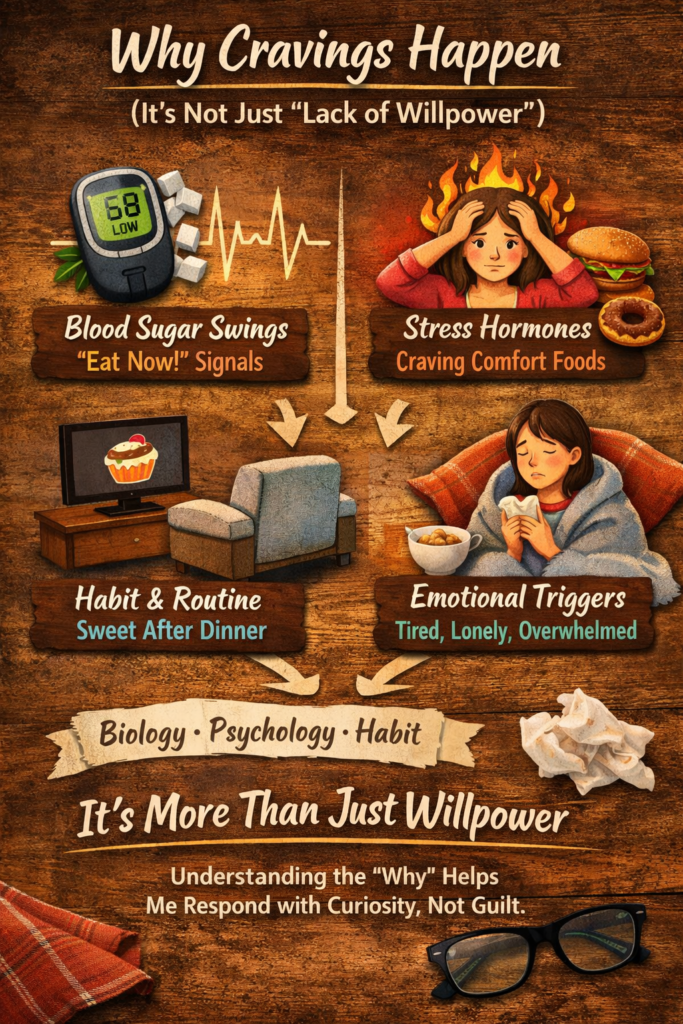
Biology, psychology, and habit all play a role in cravings. Here are some things I’ve discovered:
Cravings, particularly for carbohydrates or sweets, can be triggered by fluctuations in blood sugar. My body sends out frantic “eat now” messages when my levels fall or rise. Cortisol and other stress hormones boost hunger, particularly for comfort foods. Old habits come out on their own, such as wanting something sweet after supper because that’s what I’ve always done. Hunger is a cover for emotional demands, particularly when I’m lonely, exhausted, or overburdened. Knowing the reasons behind desires has enabled me to react with curiosity rather than guilt.
Emotional Eating: The Quiet Coping Mechanism
I had no idea how frequently I used food to control my emotions until I developed diabetes. I notice trends now that I’m paying attention: I like crunchy snacks when I’m stressed. I want something cozy and reassuring when I’m depressed or exhausted. I go mindlessly into the kitchen when I’m bored.
I started using food as a reward, diversion, or means of relaxation. And really? For a while, it worked. However, my emotional and physical health would deteriorate later. One of the most challenging aspects of this trip has been learning to distinguish between bodily and emotional hunger. Physical hunger has been one of the hardest parts of this journey.
What’s Helping Me Break the Cycle
These aren’t rules. They’re tools—things I’m practicing, not perfecting.
1. Pausing Before I Eat
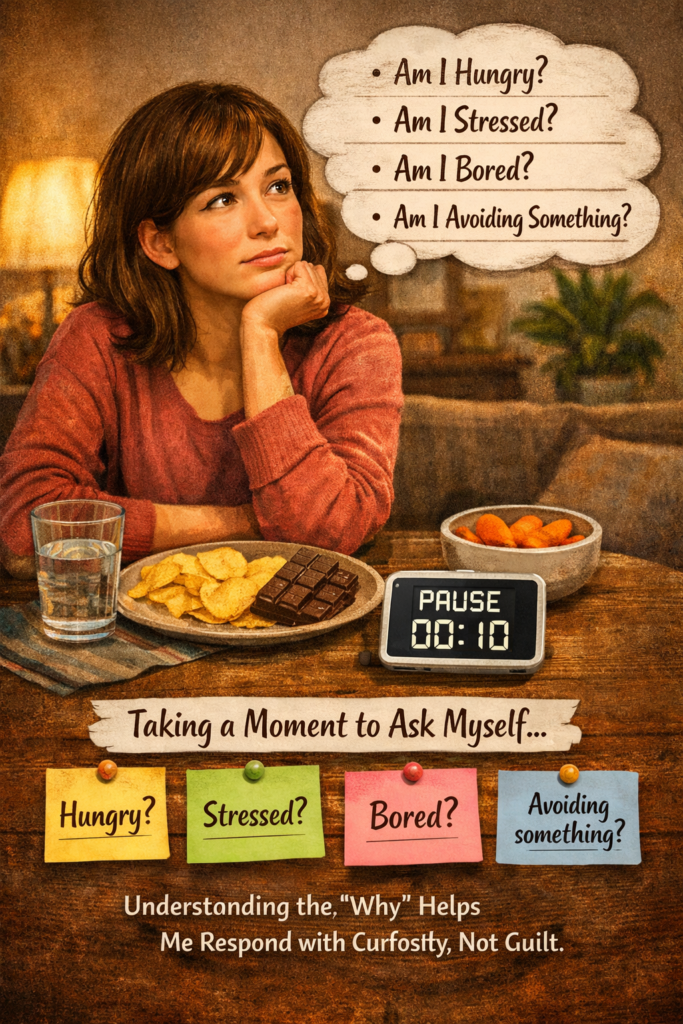
Just a few seconds to ask:
- Am I hungry?
- Am I stressed?
- Am I bored?
- Am I trying to avoid something?
Sometimes the answer is “I’m stressed, and I still want the snack,” and that’s okay. The pause gives me a choice instead of autopilot.
2. Creating “Safe Comforts.”

Instead of eliminating comfort food, I’m redefining it:
- Greek yogurt with berries
- A warm veggie scramble
- Low-carb toast with avocado and egg
- Sugar-free pudding with chia seeds
- A cup of tea with something crunchy on the side
Comfort doesn’t have to derail my blood sugar.
3. Letting Myself Feel the Feeling
This one is uncomfortable. But when I actually sit with the emotion, stress, sadness, and frustration, it passes faster than I expect. And I don’t end up eating to numb it.
4. Keeping My Blood Sugar Steady
Balanced meals = fewer cravings. Protein, fiber, and healthy fats make a huge difference in how stable I feel throughout the day.
5. Finding Non-Food Rewards
This has been surprisingly fun:
- A new diamond art kit
- A walk outside
- A hot shower
- A few minutes of journaling
- Watching a comfort show
Rewarding myself without food feels like reclaiming something.
The Emotional Side of Diabetes No One Talks About
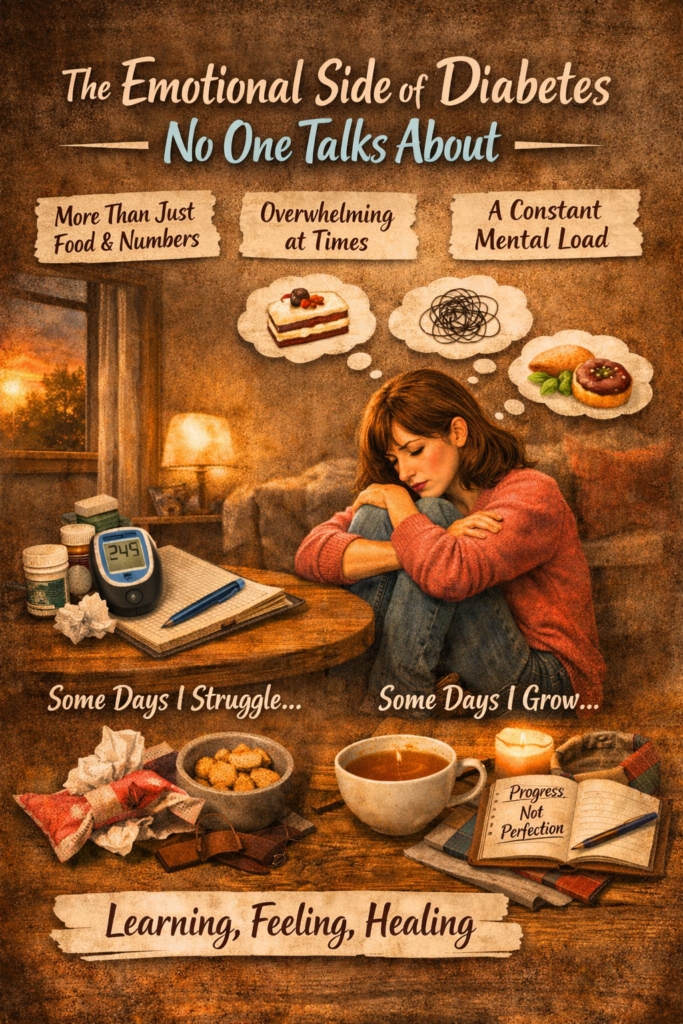
It takes more than just carbs and numbers to manage diabetes. It’s sentimental. It’s too much to handle. It’s an ongoing mental burden.
Emotional eating and cravings are not indicators of weakness, but rather of my humanity. And part of healing is learning to deal with them with empathy.
I’m still working it out. I do well on some days. I don’t every day. However, I discover new things about my body, myself, and my own needs every day.
If You’re Struggling Too
You’re not alone. Cravings don’t make you broken. Emotional eating doesn’t make you weak. You’re doing the best you can with a lot on your plate, literally and figuratively.